
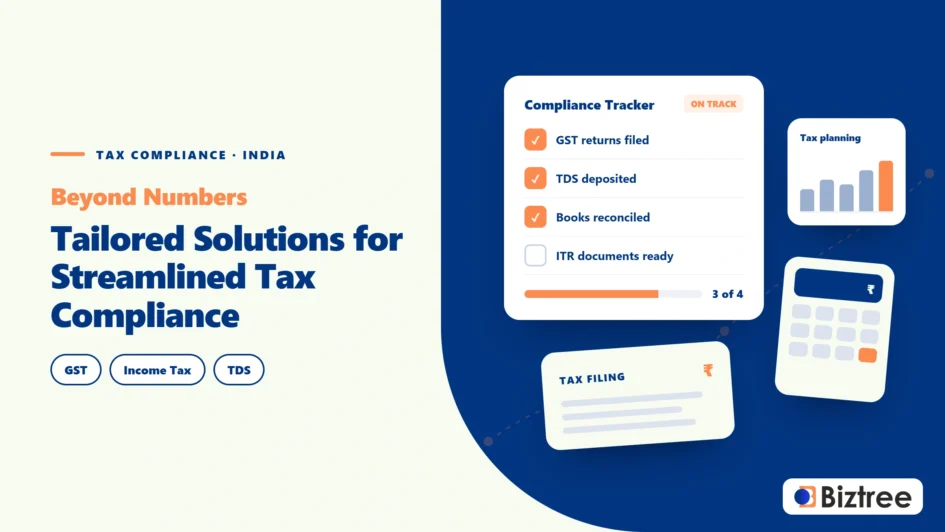
Understanding and adhering to tax compliance are essential components of creating financial stability and contributing positively to the development of the country. Especially in an economically dynamic and diversified country like India, streamlined tax compliance is very much important.
India, with its highest population in the world, greatly depends on a strong tax system to pay for infrastructure projects and other needs. So, streamlined tax compliance that is tailored to a particular solution is important for the development.
Tax compliance in India means meeting the tax-related obligations that apply to an individual or business, including filing required returns, paying taxes on time, maintaining accurate financial records and following applicable regulations. For businesses, these obligations may include GST returns, TDS deductions and returns, advance tax payments, and income tax return filing, depending on the nature and size of the business. Maintaining organised records and reviewing deadlines regularly can help businesses reduce filing errors and identify compliance issues early.
India’s legal tax compliance
The comprehensive structure created by India’s tax legislation aims to guarantee that businesses and people make equitable contributions to the development of the country. There can be serious repercussions for breaking these rules, including monetary fines and legal actions. One needs to understand the legal requirements set in the tax regulations to successfully navigate the tax landscape.
Complying with the tax laws is more than just following the law. It improves financial credibility, acts as a buffer against legal repercussions, and advances national development. By paying their fair share of taxes, people and companies take an active role in contributing to a prosperous and sustainable future.
Making tax compliance simple
A calculated approach is necessary to navigate the complex web of tax legislation. To guarantee tax compliance, it is important to maintain the right financial documentation, consult experts, and remain informed about tax regulations.
Businesses can also prepare business finances for tax season by organising records, reconciling accounts and reviewing upcoming tax obligations.
Apart from personal obligations, the way the country’s economy is shaped is greatly influenced by tax compliance. Public services, welfare programs, and infrastructure development are all supported by tax income. Understanding this connection between the economy and the nation’s prosperity strengthens the impact of compliance on the latter.
Business tax compliance services help businesses manage recurring tax obligations and supporting documentation. Depending on the business’s requirements, these services can include GST registration and return filing, input tax credit reconciliation, TDS/TCS compliance, advance tax planning, income tax return preparation, and assistance with tax notices or assessments. A coordinated process between accounting, payroll and tax teams helps keep financial records consistent and makes it easier to track upcoming filing and payment deadlines.
Trends in tax compliance
Tax laws change along with the economic environment. Remaining ahead of the compliance curve requires anticipating changes in the future and adopting emerging technologies. So, have a brief idea about how technology may influence future developments in income tax compliance as well as possible changes to tax regulations.
The foundation of efficient, streamlined tax compliance is timely filing. Understanding the dangers of filing beyond the deadline emphasizes how important it is to fulfil them and provides helpful advice on how to be on time.
Developing a culture of compliance requires improving financial literacy. People can be empowered to handle the tax system with confidence at a young age by supporting initiatives and advocating for the inclusion of tax education in educational institutions.
Tax compliance in various streams
Here is the tax compliance of various streams in India:
- Goods and Services Tax (GST) and income tax compliance
GST report matching with income tax return matching is an important aspect of income tax compliance for businesses covered by the GST system. For individual income tax also, there has been an increase in compliance rate.
- Business tax compliance
In India, companies are expected to follow income tax laws. It is important that they maintain precise accounting records, submit tax returns, and cooperate with any required tax audits.
- NRIs tax compliance
NRIs must also abide by income tax regulations, which vary depending on their income sources and residential location.
How can small businesses improve tax compliance?
Small businesses can improve tax compliance by maintaining up-to-date books of account, reconciling bank statements and GST records, checking TDS obligations, keeping invoices and payment proofs organised, and maintaining a calendar of applicable due dates. Businesses should review their compliance requirements whenever their turnover, workforce, business structure or transactions change. Working with a qualified tax professional can help identify obligations that apply to the specific business and reduce the risk of missed filings, incorrect reporting or avoidable penalties.
Final thoughts
Being financially honest in India heavily depend on timely tax compliance. Transparent, accountable and streamlined tax compliance is ensured by adhering to tax standards, which enables the government to fund various development initiatives. Careful tax preparation and a solid understanding of tax law are necessary to increase tax compliance.
Businesses that need support with recurring financial tasks can explore our finance and accounting management services to understand how outsourced expertise can support their operations.
Frequently Asked Questions
Tax compliance means meeting the tax obligations applicable to a business, including filing required returns, paying taxes on time, maintaining accurate records and following relevant tax laws. Depending on the business, this may include GST, TDS/TCS, advance tax and income tax return filing.
Tax compliance services may include GST registration and return filing, input tax credit reconciliation, TDS/TCS compliance, advance tax calculations, income tax return preparation and assistance with tax notices. The exact scope depends on the business structure and applicable requirements.
Tax compliance helps small businesses meet legal obligations, maintain reliable financial records and reduce the risk of late fees, interest or penalties. It also supports better cash-flow planning and helps businesses respond to tax queries with organised documentation.
Businesses should track applicable due dates, maintain accurate books, reconcile GST and accounting records, review TDS obligations and file returns correctly. Since requirements differ by business and tax type, confirm current deadlines and obligations through official government guidance or a qualified tax professional.
Yes. Businesses can outsource some or all of their tax compliance work to an experienced accounting or tax service provider. Depending on the agreed scope, this may cover return preparation, reconciliations, tax calculations, deadline tracking and support with notices, while the business remains responsible for providing accurate information and meeting its legal obligations.
Accounting & Payroll Resources – Guides for Startups & MSMEs



 Bookkeeping & Accounting
 Payroll Processing & Compliances
 Tax Compliance & Solutions
 Zoho Finance Services
 Virtual CFO Services